Begin with ledger fishing
The Catch calls the conventional waiting-on-the-bottom approach ledger fishing. A rod, rig and suitable bottom bait form the starting arrangement. The manual explicitly distinguishes rigs suited to silt, gravel and weeds. That makes bottom type a practical equipment choice. It is not enough to select a familiar brand and assume that every rig with the same hook size presents the bait in the same way.
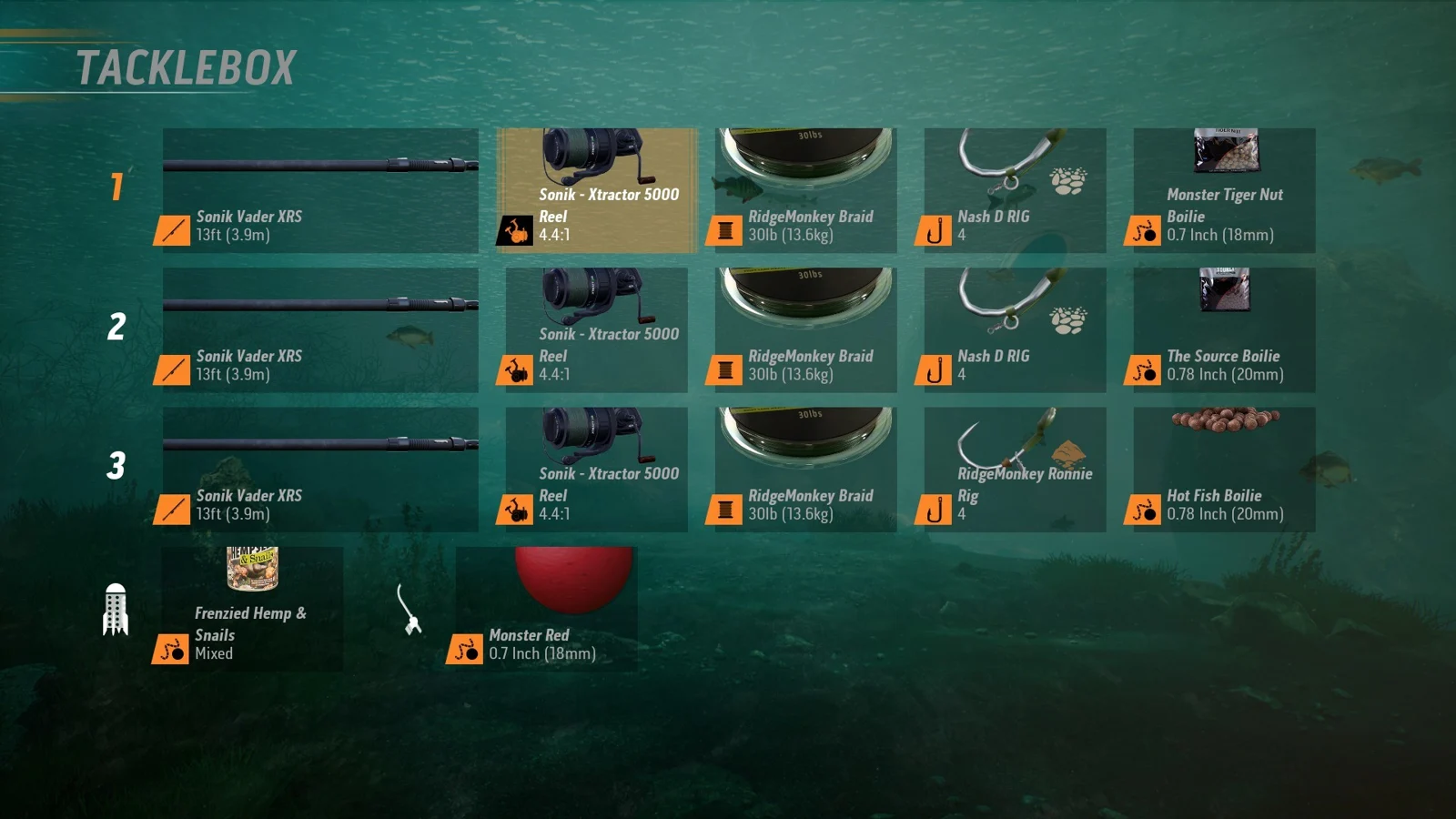
Read the tacklebox as a combination
Use the tacklebox to connect rod, reel, line, rig and bait to one intended carp session. Keep the rig’s substrate role separate from hook size: one describes where the arrangement is intended to work, the other is another equipment choice. Select the permitted bait after the rig, noticing what the game allows. If an option is unavailable, investigate the arrangement instead of treating the missing choice as a reason to buy unrelated equipment.
A worked preparation example
Imagine arriving with a gravel-oriented arrangement but discovering that your intended fishing area is described as silt. The useful question is whether the rig matches the place you are actually fishing. Compare the available silt alternatives and the compatible bait before casting again. This is a preparation scenario, not a prescribed rig for every carp or an assertion that a substrate label alone determines the result.
Label the equipment diagram properly
Draw the chosen arrangement as connected components and annotate the rig with its bottom type. Put the bait name beside it rather than inside a decorative fish icon. Under the diagram, write the target carp type and intended area. A reader should be able to explain the plan from the drawing. Leave exact distances and strengths to the actual items you have equipped rather than inventing a universal “big carp” number.
The useful check before waiting
Once the rod is out, confirm which rig and bait belong to that position. With several tacklebox slots, a remembered plan can differ from the selected arrangement. Resolving that mismatch is more useful than waiting longer for a setup you have not actually cast.